Monday, December 13, 2010

Response to Roberta Smith's "Who Needs a White Cube These Days?"


  • Different ways to curate a gallery in non-tradition way

  • Many successful works outside the cube

  • Cube will always work and will last

  • Galleries in constant flux and change

  • Gallery space can help or be irrelevant to artwork


  • Has the cube become irrelevant in the art world?
    Will alternative spaces soon become the new norm as artist look to cheaply display their work?

    Critiques

    INDIVIDUAL

    • Kim Russo Sept. 8th
    • Trisha Ram Sept. 19th
    • Harmony Hammond Oct. 2nd
    • Kim Russo Nov. 2nd
    • Kasey Lou Lindley Nov 20th
    • Therese Mcpherson Dec. 5th


    GROUP

    • Jen Nugent, Therese Mcpherson, Trisha Ram Dec 2nd
    • Final Group Crit Dec 7th

    Response to Frontline's "Digital_Nation"


  • discusses how the internet is affecting people in New York City, Cambridge, California, and South Korea.

  • Internet addiction has developed into a major problem in South Korea where they have training for children teaching them safe internet habits

  • young people use an awful lot of media that can distract from their studies or make students more focused

  • investigated online games like World of Warcraft and Second Life

  • looked at how relationships are developed in online communities

  • Gaming in the military was discussed as a method of treating PTSD


  • How can an art market develop in communities that exist solely online?
    Will our generation be known as the connected generation or the distracted generation?

    Submitted Application

    Over the last 2 months, I have been developing a workshop to teach stop motion animation with a company on the west coast for the summer of 2011. Here are a couple details from our correspondence:

    • intro to stop motion course for up to 6 students
    • developed outline with a listing of supplies needed and 
    • organized ideas for a lesson plan going from simple to complex animation
    • developed concept for the story the students will animate scenes for
    • explored methods of creating puppets and sets
    • corresponded by email and over the phone
    • set goals and deadlines to have work completed by
    I had to sign a non-disclosure agreement, so I cannot post the emails or specifics on the project.

    Response to "Emerging market: Christine Mehring on the birth of the contemporary art fair"

  • talked about the history and origin of art fair

  • first fair- 9/13 1967 in Cologne 

  • Kunstmarkt was a success by visitors who normally would not have purchased art

  • Counter exhibits began copying their success

  • success led to more fairs and exhibits

  • art became available to a much wider audience


  • Does the art fair setup of booths lead to the isolation of artists and separation of the haves and have nots?
    Are art fairs still a necessity to sell artwork in today's market?

    Response to Hickey's "The Birth of the Big Beautiful Art Market"


    • He first encountered aesthetics woking with cars
    • Relates car culture to the art world 
    • "like artists in the nineteenth century, these [car] manufacturers began designing visual obsolescence into their products by institutionalizing style change."
    •  Author evolved his aesthetic sense through customizing a 1957 Chevrolet Bel Air, a bronze-lacquered 1937 Chevrolet pickup and other GM models and that an acquaintance of his began his art education by pondering lowriders in El Paso, Texas
    • Artist's "personal style" could lead to the quick "visual obsolescence" of one's artwork much like the auto industry
    • American commerce is an art market because they create desire
    • Art market has been taken over by the commercial world
    • Those "promoting rebellion, proposing outrageous reconfigurations and different ideas" were able to cash in. 


    Is the modern art market still following the stagnate car culture?  
    What influence has the internet had on the visual obsolescence of artwork?

    Response to "Jack Burgess explains Contemporary Art"

    Contemporary Art @ from Trent Weaver on Vimeo.

    • gives a satirical look at contemporary art for a laymen with no prior art history knowledge
    • some of the points are valid such as answering the common quip "my 2 year old daughter could do that," with "but could she THINK of it?"
    • Some of the humor was lost in the attempt to mimic Wes Anderson's filmmaking style
    • His points on contemporary art may be relevant to some part of the art world, but is not truthful about the contemporary art world as a whole

    How does the filmmaking style of Wes Anderson relate to the contemporary art world?
    Is the humor in this video intended for the art makers, the viewers, or the laymen?

    Response to Goode's "Among the Inept, Researchers Discover, Ignorance Is Bliss"

    • most incompetent people do not know the are incompetent
    • people who do things badly are more confident of their abilities
    • skills required for competence are same to recognize competence
    • grammar and humor were "grossly overestimated" by those who scored lowest
    • most able subjects were likely to underestimate their own competence

    Is it possible to gauge one's own competency completely objectively?
    What red flags can we use to better determine our own incompetence?

    Sunday, December 12, 2010

    Response to "Sound of Music | Central Station Antwerp" video


    • 200 dancers perform a version of "Do Re Mi" in Central Station, Antwerp
    • promotion stunt for Belgian tv station
    • music changes to remix half way through
    • attempts to introduce theater into foreign environment
    • actors spring into action seemingly at random
    • trying to create live scene that mimics the movie musical system

    Could participation of the audience be part of this performance, rather than just observance?
    Does this performance further disregard the origins of the play involving Nazis in Austrea?
    Is this art or advertisement? or both?

    Response to Zizek on Crossdressing to the Sound of Music


    • Zizek discusses the Sound of Music
    • on surface about Austrian family fighting Nazis
    • Austrians depicted as facists
    • Nazis  are presented as esqisically dressed jews
    • receive opposite message in dress of characters which in turn subliminaly promoting a facist message
    Having never seen The Sound of Music, I cannot comment on the validity of Zizek's points, but a few friends I have mentioned this idea to have called it "utter bullshit."  I think this may be congruent to the theory that Dark Side of the Moon syncs up with Wizard of Oz or the secret illuminati messages hidden in Kubrick's films.     

    Response to Mark Byrne's "How Marina Abromavic's Red-Velvet Rope at the MoMA Works"


    • discusses Marina Abramovic's performance "The Artist is Present" 
    • vip guests have priority over public guests
    • any celebrities or important people were able to skip line 
    • general public had to wait for hours 
    • person sitting could spend as long as they want with Abramovic
    • piece deals with anticipation, waiting, and possible rejection

    I think that Abromavic's work draws much needed attention to problem of celebrity and vip in the art world.  Without them, we would only have galleries and museums to purchase our outlandishly expensive work.  But they turn the art world into a place where status, class and reality tv are the be all end all.

    Does Abromavic's work only add to the problem of celebrity without addressing ways to solve it?
    What if one of the general public were to skip the line, would they be removed entirely?
    How is this different than waiting in line for a Sarah Palin book signing?  How is this the same?

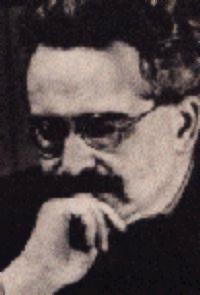
    Response to "The Work of Art in the Age of Mechanical Reproduction" by Walter Benjamin; 1936

    • Two type of modern art forms "reproduction of works of art" and the "art of film."
    • Reproducing art work lowers its value
    • Limited uniqueness and reproduction become accepted as the significance of the the masses increase
    • all artwork has an "aura" which creates a cult of beauty
    • photography, tech/ mechanism (reproduction) helped destroy the aura


    My video work has an inherent reproductive quality in where it can easily played back on infinite. I was born during an age where any and all information can be instantly reproduced, captured, downloaded, and uploaded.

    If artwork is able to be reproduced virtually, does it still hold any intrinsic value as a reproduction?

    How do elements like youtube, flickr, or tumblr affect the aura of a piece of artwork?

    Are there any art forms that are not able to be reproduced?

    Tuesday, October 19, 2010

    Response to Zizek's Rumsfeld's Unknown Known or Iraqs Initiation Into Democratic Practice

    Zizek writes about the United States military's support of torture and the following exposure in the Abu Ghraib scandal.  He relates the practice of torture to acts of hazing in school and the military. "to be accepted into a closed community" is the goal of most hazing rituals.  But the main difference is the acts were perpetrated as exclusionary rather than for acceptance.  These acts were to initiate the prisoners into the darkest side of American culture, the "obscene underside of the public values of personal dignity, democracy, and freedom."  He also comments on Rumsfeld's "known knowns" (the things we know that we know) and "known unknowns" (the things we know that we don't know) and suggests that Rumsfeld should have included the "unknown knowns" (the things we didn't know that know).  These unknown knowns are "the disavowed beliefs, suppositions, and obscene practices we enact but don’t allow ourselves to see, and which—via practices such as outsourcing—are becoming increasingly easy to ignore"  I believe that the exposure of such unknown knowns has only made these acts more secretive and harder for further events to come to light rather than eliminating these practices altogether.

    1.  Does one blame the solider for committing these acts? or the military for creating the environment for these acts to be committed?
    2.  How can we better expose "unknown knowns" such as hazing rituals and torture
    3.  Are we as citizens partially responsible for these acts by living under and supporting a government that commits these crimes?

    Thursday, September 23, 2010

    This is More of A Statement

           What happens to us when we die? Is there some omnipotent creator waiting to remind me of every wrong I’ve made through my life?  Is death simply the antithesis of life?  Does our conscience live on or does it enter an everlasting sleep devoid of dreams?  These type of questions fascinate me because there is no way to know for certain and when you do die, there is no way to share your findings.  Death is such a finite concept, yet it leads to so many unanswerable questions.  My personal understanding is that death is the final octave at the end of your life’s sonnet.
           I am attempting to create an experience using stop motion animation that shows the viewer what it means to be comfortable with death and accepting one's end without a second beginning. This animated short film explores this topic and has a unique connection to creationism where the animator physically creates life on screen out of inanimate objects frame by frame.   
           A major influence on this theme was a ritual I go through every time I fly on a plane. Before the plane lands or takes off, I ask myself a series of existential questions. "Would I ready to die if the plane crashed?" "Do I still have work left to do?" "Would I be ready to complete this existence?" "Do people I care about still need me around?" I already know the answer to these questions, but it's a nice process that helps reassess my life goals and reaffirms the importance of this life.   My most firmly held belief today is that we have to enjoy/appreciate the brief time we have on this earth or risk missing out on the beautiful opportunity that is this life and all it has to offer.

    Tuesday, September 21, 2010

    this is not a statement

            One of the most important topics of human existence is the concept of death.  What happens to us when we die? Is there some omnipotent creator waiting to remind me of every wrong I’ve made through my life?  Is death simply the antithesis of life?  Does our conscience live on or does it enter an everlasting sleep devoid of dreams?  These type of questions fascinate me because there is no way to know for certain and when you do die, there is no way to share your findings.  Death is such a finite concept, yet it leads to so many unanswerable questions.  My personal understanding is that death is the final octave at the end of your life’s sonnet.
            I am, at heart, a storyteller.  The majority of my work involves the stop motion medium to tell my story.  I enjoy the rich detail and the ability to create faux realism though the use of miniature sets and puppets.  This level of realism is difficult if not impossible to achieve with other animation techniques.  This is due to the fact that every frame of a stop motion animation existed on a stage utilizing real objects, real lighting conditions, and real textures.  This interest in stop motion comes from my early fascination with Sci Fi and monster movies such as the Star Wars films.  These films heavily used stop motion animation in a time when computer animation was unheard of.  The medium of stop motion has a unique connection to creationism in the fact that the animator physically creates life on screen out of inanimate objects frame by frame.
            Much of my early life was spent internally questioning religious ideology and belief.  As I grew older, my skepticism grew to where I currently reject the notion of an afterlife or second life.  The followers of organized religion believe that they are preparing themselves for a second life that will come after they die.  They study scripture, attend church, curtail their lifestyle, speak to deceased loved ones, and spread the message in faith that they will be accepted in a second life after they die.  I feel these ideas and rituals come from a fear of the finality of death.   My most firmly held belief today is that we have to enjoy/appreciate the brief time we have on this earth.  I fear that these people may miss out on the beautiful opportunity that is this life and all it has to offer.
            A major influence on this theme was a ritual I go through every time I fly on an airplane. Before the plane lands or takes off, I ask myself a series of existential questions. "Would I ready to die if the plane crashed?" "Do I still have work left to do?" "Would I be ready to complete this existence?" "Do people I care about still need me around?" I already know the answer to these questions, but it's a nice process that helps reassess my life goals and reaffirms the importance of this life. Someday I may be ready to die, I just have too much to accomplish still and I will not get a second chance.
            I want to create an experience using stop motion animation that shows the viewer what it means to be comfortable with death and accepting one's end without a second beginning. The animated film will explore this topic in a linear/non linear story format and be 2-3 minutes in length.  I hope to make a piece that is honest yet not condescending about my views, while also being wholly unique and engaging for the viewer.

    Barthes Death of the Author interpretation


    -The author should be removed from writings.
    -We should not  take author's personal views/ attributes into consideration while critiquing/interpreting authors work.
    -The story is already there, the author just has to organize it.
    -author's beliefs/background should not be part of conversation of writings.
    -language, not author, that speaks.


    Some writing works as its own monument, unable to be associated with its creator.  Other works stand as an expression of the ego of the author.  Saying that the writings already exist in the ether is like saying the poetry is already written in the magnets on the fridge.  I don't see the necessity of removing my personal views/background from my work and it's interpretation.  I enjoy knowing the background of Hunter S. Thompson and how his personality influences his writings and how closely it mirrored his real life.  I believe my work can stand on it's own without the viewer's knowledge of my background.  This knowledge does not hurt my work though.  In fact, I think it helps the viewer get a grander perspective of which circumstances the work was created under.

    Would Barthes consider Warhol's work successful without taking his persona into consideration of his work?  What about Koons or other "personality" artists?

    How would you let a viewer know that you do not want them to consider your personal views in their interpretation of your work?

    Monday, September 20, 2010

    Why Do I Do Art? (Sorry its late)

    1. The Big View:
    I am an artist because at a young age, I discovered the desire to create and it has become one of my basic necessities for survival along with food, water, shelter, etc.  As my skills improved, I experimented with creating simple flip book animations even though I had no concept of animation at the time.  Eventually I discovered stop motion animation and fell in love with the ability to make my action figures and legos come to life on film. My mom, art teachers, and friends encouraged me to develop and pursue the arts through grade school.  My talents in drawing, painting, and sculpture improved to the point in high school where I realized I would not be happy pursuing any other career field.  I was also an avid star wars fan in my teen years and learned that computer animation was a major part of the films.  Ringling became the standout school in the field of animation.  I applied for and was accepted into the computer animation department.  I soon realized the computer animation industry was a much different beast than I had anticipated.  I had to search for a period for what truly made me happy in creating art.  I remembered back to my early interest in stop motion and realized what was missing from my current experience at Ringling.  The Fine Art's department was a breath of fresh air for my creativity.  I was given to opportunity to create whatever interested me rather than create for someone else's vision of what is acceptable.   Creating art stopped feeling like work and became all you can think of day in day out.  I knew then, that this was where I needed to be.  I have been experimenting over the past two years with animation and pushing the medium in new directions such as with holograms and projections.  I'm excited where these new paths will take me.

    2. The Immediate View:
    My current direction is to create a 2-3 min stop motion that deals with the topic of life after death.  This idea begun at grade school when I began to question religion and the beliefs I was taught in church.  I have done satirical pieces in the past that dealt with religion.  These past works were more about the absurdity of organized religion, where my current idea is to deal with the more serious question of life after death.  A major influence on this theme was a ritual I go through every time I fly on an airplane.  Before the plane lands or takes off, I ask myself a series of existential questions.  "Would I ready to die if the plane crashed?"  "Do I still have work left to do?" "Would I be ready to complete this existence?"  "Do people I care about still need me around?"  I already know the answer to these questions, but it's a nice process that helps reassess my life goals and reaffirms the importance of this life.  Someday I may be ready to die, I just have to much to accomplish still and I will not get a second chance.  I fear that other's do not put enough importance on how precious and short our lives on earth are.  I want viewers of my thesis to understand the beautiful opportunity that is this life and all it has to offer.  I want the viewer to experience what it means to be comfortable with the idea of death and accepting one's end without a second beginning. This topic will be explored in a linear/non linear story format.  I hope to make a piece that is honest yet not condescending about my views.

    Tuesday, September 14, 2010

    Response To Chaos, Territory, Art by Elizabeth Grosz

    Elizabeth Grosz draws an interesting evolution from the biological sexual selection to the creation of art.  She argues that since we have moved beyond the primeval means of living, we have a void that "enables the production of the frivolous, the unnecessary, the pleasing, the sensory for their own sake."  I really enjoyed this part because it connected our biological origins to our intrinsic need to create and appreciate art.  She then goes on to talk about the first gesture of art, the creation of the frame, which "establishes territory from out of the chaos that is the earth."  This device separates and marks one's territory, to let one know where these sensations may be found.

    1.  Where would Grosz determine the frame to be in public art, performance art, or digital art?

    2.  Is there any way for art to move beyond the confines of the frame?

    Monday, September 06, 2010

    Expectations for Thesis 9/6/10

    For my senior thesis project, I wish to create a 2-3 min long stop motion animation of a personified character of myself dealing with the concept of life after death.

    This will be expressed realistically with dream-like/surreal elements added for dramatic effect. There may be satire and irony included as much of my work tends to be satirical. The medium of stop motion creates a level of realism that is difficult if not impossible to achieve with other animation techniques. This is due to the fact that every frame of a stop motion animation existed on a stage utilizing real objects, real lighting conditions, and real textures. This medium will let me play with the viewer’s perception of reality. The medium of animation has a unique connection to monotheism in the fact that the animator creates life on screen out of inanimate objects.

    Much of my early life was spent questioning religious ideology and belief. As I grew older, my skepticism of a second or everlasting life grew to where I currently reject the notion. I still appreciate the mythology and culture of modern day religion, but I am disappointed how on the judgements made on others, and My most firmly held belief today is that we have to enjoy/appreciate the brief time we have on this earth. Many followers of organized religion believe that they are preparing themselves for a second life that will come after they die. The followers study scripture, attend church, curtail their lifestyle, speak to deceased loved ones, and spread the message in faith that they will be accepted into another life after they die. I fear that these people may miss out on the beautiful opportunity that is this life and all it has to offer. I want the viewer to experience what it means to be comfortable with death and accepting one's end without a second beginning. This topic will be explored in a linear/non linear story format. I hope to make a piece that is honest yet not condescending about my views.

    2. What kind of research do you need to do? Where and how will you do it?

    Over the summer, I began researching many different theories and beliefs about what happens when we die. I tried to stay as unbiased as possible in my research and hope to expand my exposure to more differentiated view points on life after death to pull story ideas from. I discovered that there were some interesting superficial connections made between some religious beliefs and scientific theories. I need to do more research into these topics to better understand where these beliefs come from and understand their relevancy to modern thinking.

    3. What materials and/or processes will you use?

    The animation I create will utilize the stop motion animation medium and include realistic props and sets that are lit and photographed with a DSLR to create a high definition final animation. Film and photo shooting techniques, such as “soft boxes,” depth of field, and green screen compositing will be utilized for the creation of the project.

    4. What is the scope of your project? How many works will you make? Approximately what will the size be?

    There will be one 2-3 minute long animation created for this project. If I use this animation in a show, props and sets can be used for additional works to let the viewer understand the creation of the project and learn the process of stop motion animation.


    Timeline

    Preproduction
    End of October- finalized story
    indiv crit
    group crit
    End of November - finalized story boards and concept art
    indiv crit

    Production
    End of December -begin creation of props, sets, and puppets
    End of January- begin filming
    indiv crit

    Postproduction
    End of March-wrap up filming and begin editing
    End of April -edit/composit/and add effects
    group crit
    indiv crit
    Early May- Deliver final film

    Thursday, September 02, 2010

    Agnes Martin Interview review


    Agnes Martin Interview (20:00 version, 1997) from Chuck Smith on Vimeo.

    I'm not sure if I agree with Martin's view on inspiration vs experiment.  In my own work, its almost a chicken or egg scenario its hard to tell which came first.  It was interesting to hear her describe music as the best art form, coming from a painter.  I do agree that music is special in its ability for the viewer to respond emotionally without being intellectual.  It was really humbling to be reminded that there is so much that really don't know; that we are still learning and need to act like it.   As a video artist/animator, it was hard to relate to some of the painting topics she was discussing.  It is amazing how far we have come since women were treated as second class artists.

    Sunday, August 29, 2010

    Review of Susan Sontag’s Against Interpretation

    In the race to create the new and interesting, we tend to get bogged down by the apparent need to wrap our messages under layers in our work.  Susan Sontag's paper outlines how art started as an  "imitation of reality."  Fast forward to modern day, and art has transformed into a means of translating the content into a cryptic foreign language that must be loosely translated by the viewer.  Only the artist has the original rosetta stone to decipher it. We as artists, continue to  play this game by finding new ways to hide true meaning behind layers and layers of interpretation hoping that the viewer will comprehend the original message or meaning.  This can often backfire by creating work that can be interpreted in a myriad of ways that are out of the artist's control.  Sontag paper observes that modern art work is less about the sensual perception more about the symbology and representation of abstract concepts.  She wishes to return to the period before interpretation became central to art.

    I really enjoyed Sontag's paper as it mirrors my own struggle with content and my work being considered too literal.  With film and animation being both linear and story driven for the most part, it is hard to create something  that is both easy to follow and an enjoyable challenge for the viewer to interpret the content.  Much like how pop art and abstract art abstain from interpretation, Sontag states that film is interesting as an art form where cryptic messages are not as ingrained in the medium as the visual language and story are. I am going to try to keep this paper in mind as I develop my own story for my animation for Thesis.

    "I Am / Am Not An Artist" aka "As Seen On TV" video performance


    "I Am / Am Not An Artist" aka "As Seen On TV" video performance from Jeremy Fisher on Vimeo.

    Mapped projection onto my face of contestants from Bravo’s “Work of Art: the next great artist” I recited my favorite quotes from the show while images of the artists/contestants transformed my appearance. The work asked the viewer whether these people should be considered actors, artists, personalities, or game show contestants. It also forced the viewer to laugh at some of the inherent humor of the art world.

    Friday, August 27, 2010

    Expectations for sculpture class

    As someone who coexists in both the world of sculpture and the world of video, I feel I have a great opportunity here to create a series of works that are wholly unique.  I wish to push my video/projections sculptures into new directions and experiment with video living in the 3D space.  I have recently begun experimenting with video that escapes the confines of the screen or monitor and lives on it own, i.e. holograms and mapped projections onto 3D objects.  This work could also expand on my thesis as far as my concept or could stand on its own.  I think there are many directions I can take this work over the semester and I am excited to get to work.

    Sunday, August 01, 2010

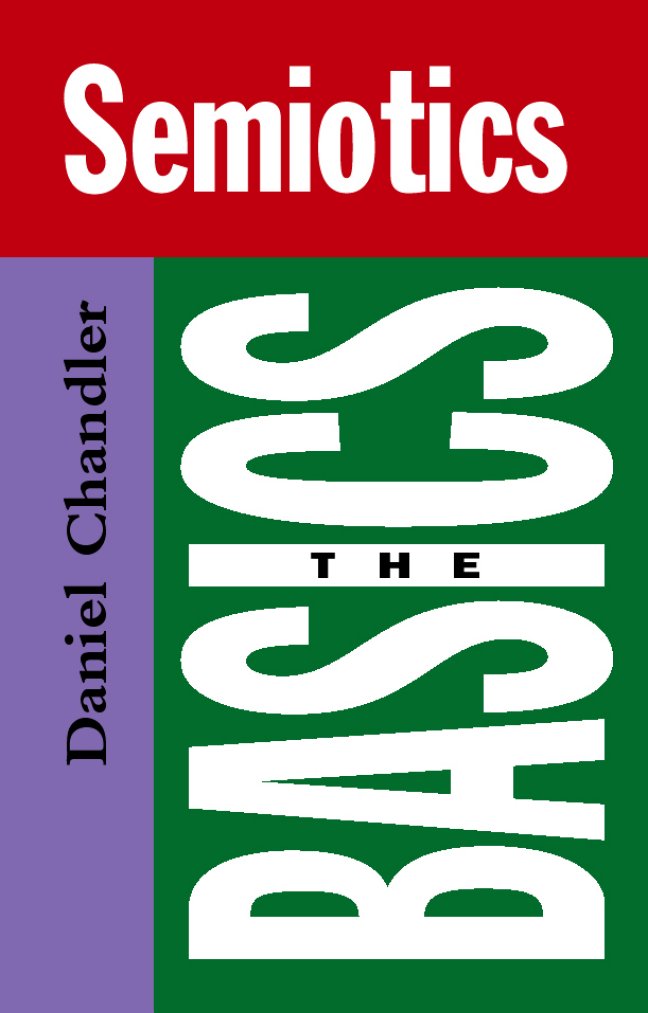
    Review of Semiotics: The Basics-Challenging the Literal


    Before picking up this book ("cough" .pdf), I had never considered myself particularly skilled in linguistics or thought much about semiotics and tropes.  It seems like ages since I had even stepped into an English classroom.  For me, trying to sit and read about the nature of language was like trying to have an engaging read the instuction manual.  But here I am, observing the semiotics of my previous statements.  Not unlike watching the movie "Halvetica" (which I highly recommend) and then noticing the pervasive font everywhere you turn.  So as much as I want to trash the reading as a bore and textbook worthy, I actually learned quite a deal from it.

    Saturday, March 13, 2010

    Smells Like Art School Has Moved to Tumblr

    Go check it out.

    This blog is now serious business.